(NMC) issued new guidelines on ethical advertising and public communication for hospitals, medical institutions and registered medical practitioners. The guidelines came into force immediately, and most of the “top healthcare marketing agency in Pune” pages competing for this search were written before they existed. If a clinic, hospital or doctor in Pune is still running testimonial videos, review-collection drives, before-and-after posts or discount-led campaigns, parts of that activity may now sit on the wrong side of the line.
This guide explains what changed, how the rules differ for an individual doctor and a hospital, and what a compliant, education-first marketing programme looks like in practice. It is written for owners and managers who want to keep growing without putting a registration or a reputation at risk.
What Changed on 6 October 2026
Digital Content Now Counts as Advertising

According to published summaries of the notice, the NMC now treats digital, social media, sponsored, influencer-led, search-engine and AI-generated or AI-assisted communication as advertising whenever it has a promotional character. In plain terms, a post, a video or a web page is judged by what it does, not by where it appears. Social media is not banned, but promotional content on any channel is treated as advertising.
The Guidelines Apply Immediately and to Everyone
The guidelines apply to registered medical practitioners as well as to hospitals, medical institutions and clinical establishments, and they took effect on the date of the notice with no transition window. Reports on the penalties describe graded action by the State Medical Council, ranging from warnings and ethics training for a first violation up to suspension or, for repeated violations, removal from the medical register for a period.
Why Pune Providers Should Act Now
Pune has a dense, competitive healthcare market across Kothrud, Wakad, Baner, Hinjewadi, Kharadi and the PCMC belt, and many providers built their online presence around reviews, patient stories and offers. That playbook is exactly what the new guidelines target. Providers who audit their website, Google Business Profile and social channels now are far better placed than those who wait for a complaint.
Doctors and Hospitals Follow Different Rules
The single most useful thing to understand is that the guidelines treat an individual doctor and a hospital differently.
| Area | Individual doctor (registered medical practitioner) | Hospital or medical institution |
|---|---|---|
| Promotional advertising | Not allowed. No soliciting patients directly or indirectly, no self-promotion, and no engaging a third party to market medical services | Not allowed in promotional form, but factual and verifiable information is permitted |
| What you may publish | Genuinely educational content in your own name and designation, such as public-health talks, plus formal factual announcements | Name, location, contact details, departments, facilities, equipment, emergency services, accreditation status and charges |
| Disclosure | Electronic posts should show your name, qualifications and registration number | Posts naming a doctor should show that doctor’s qualifications and registration details |
| Doctor directory | Not applicable | A factual directory of doctors on the hospital website is treated as patient information, not paid advertising |
| Who is responsible | You, even if an agency or influencer published the content | The institution, under the Clinical Establishments Act or the applicable state law |
Other professions may sit under different regulators. Dentists, AYUSH practitioners and homoeopaths follow their own councils’ codes, so check with the relevant body rather than assuming the NMC summary covers you.
What You Can Still Do: An Education-First Strategy
The guidelines close the promotional route for individual doctors and narrow it for institutions, but they leave a wide space for useful, factual and educational communication. This is where sustainable healthcare digital marketing in Pune now has to be built.
A Factual, Fast and Trustworthy Website
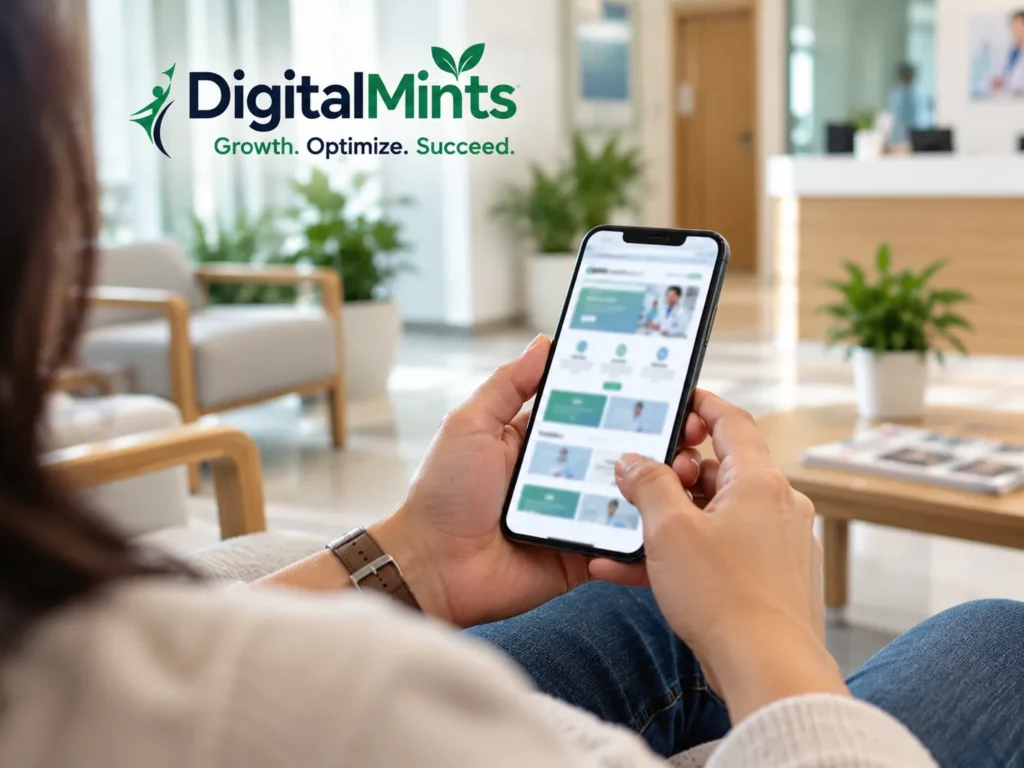
A hospital or clinic website can present departments, facilities, services, accreditation, emergency contact details and fee information clearly. The goal is a site that informs a patient who is already searching, rather than one that pressures them. A fast, mobile-friendly build matters because patients often search in a hurry, and professional web development that prioritises clarity, appointment information and accessibility serves this directly. Our web development guide for Pune businesses covers the technical side in more depth.
Educational Content and SEO for Informational Searches

Most patients start with a question: what causes this symptom, when should I see a specialist, what does this test involve. Answering those questions with clinician-reviewed, dated and clearly attributed content is both compliant and genuinely useful. This is the heart of SEO services for healthcare, and it aligns with Google’s own emphasis on experience, expertise, authoritativeness and trust, which is applied especially strictly to health topics. You can read Google’s guidance on creating helpful, people-first content directly.
What good medical content looks like
- Written or reviewed by a named, qualified clinician, with qualifications and registration details shown
- Explains conditions, tests and treatment options in plain language, including risks and the fact that outcomes vary
- Dated, with a clear “last reviewed” note so readers know the information is current
- Free of guarantees, superiority claims, fear-based wording and booking pressure
A Factual Google Business Profile
A Google Business Profile with accurate name, address, phone number, opening hours, departments and services remains one of the highest-value assets for any provider. Keep it strictly factual. Listings are a place to be found, not a place to make claims.
Doctor-Led Educational Talks

Public-health talks and awareness content in the doctor’s own name and designation, without promoting the practice or soliciting patients, are the main permitted route for individual doctors. Educational video, done carefully and with the required disclosures, can build genuine authority.
Structuring Content for AI Search
Patients increasingly ask AI tools questions about symptoms and where to seek care. AEO and GEO optimisation in a healthcare setting means structuring your factual, human-reviewed content so that AI answers can cite it accurately. It does not mean generating promotional campaigns with AI, which the guidelines specifically restrict. Our guide to digital marketing in East Pune explains why accurate AI citation is becoming a visibility factor in its own right.
What to Stop Doing Now
This table summarises practices that published summaries of the guidelines flag as restricted or risky. Treat it as a prompt for an audit, not a final legal verdict.
| Practice | Why it is risky |
|---|---|
| Patient testimonials, success stories and review screenshots used for promotion | Reported as barred, and reports say patient consent does not make a prohibited testimonial acceptable |
| Before-and-after photographs and surgical result showcases | Reported as prohibited promotional content |
| “Best doctor”, “No. 1”, “100% success” or “painless” claims | Superiority and guarantee claims are restricted unless objectively verifiable |
| Discounts, coupons, cashback or free procedures as inducements | Reported as barred for doctors and hospitals alike |
| Influencer or celebrity promotion of medical services | Reported as prohibited |
| Fake, paid or purchased reviews, ratings and followers | Barred outright, and manipulation of rankings is also restricted |
| Fear-based content that creates demand for unnecessary procedures | Reported as prohibited |
| AI-generated promotional campaigns | Reported as prohibited, with permitted AI content needing a source label |
| An individual doctor engaging an agency to market their services | Reported as barred, and responsibility stays with the doctor |
Google Reviews and Patient Feedback
Reviews are where many Pune providers will feel the change most, so it deserves careful handling. The reported position is that fake, paid, bought or manipulated reviews are barred, that a doctor should not request or share patient reviews or testimonials for promotion on social media, and that replies to reviews must never disclose anything about a patient’s care.
How this applies to a hospital that invites genuine feedback from all patients, without incentives and without selecting only happy patients, is interpreted differently across the summaries available. Until there is further clarity, the safest approach is to avoid review “gating”, never offer rewards for reviews, never reproduce reviews in promotional material, and keep any reply strictly generic. Take advice on your specific process before you run any structured review programme.
Paid Ads and Social Media for Healthcare
Google Ads and Meta Ads
Search and social advertising count as advertising under the guidelines. For an institution, Google Ads management would need to point to factual landing pages, with no superiority claims, no outcome guarantees and no offers. For an individual doctor, paid promotion of their own practice is hard to reconcile with the restriction on soliciting patients, which is why professional advice matters before spending a rupee.
Social Media
Educational posts that carry the doctor’s name, qualifications and registration number are the safest format. Our social media marketing guide explains how to build a content pillar system, and healthcare accounts should read its advice through the filter of the guidelines: educational pillars are fine, testimonial and promotional pillars are not. An earlier suggestion that clinics could feature patient experiences with consent should be treated as superseded by these guidelines.
Local Visibility Across Pune’s Neighbourhoods
Patients search by location, and appearing for “clinic near me” style queries is about being accurately listed and genuinely useful, not about solicitation. Factual location and department pages for each branch, consistent contact details across directories and well-structured service information all support local visibility without promotional claims. The locality principles in our guides to the Wakad corridor and Kothrud and Karve Nagar apply here, with one important filter: keep every page factual and avoid the promotional language those general guides use for retail businesses.
How Much Does Healthcare Digital Marketing in Pune Cost
Because the permitted work is education-led and clinician-reviewed, the budget goes into quality content and a solid website rather than into ad spend and promotions.
| Provider type | Typical monthly investment | What it usually covers |
|---|---|---|
| Single clinic or small practice | Entry to mid-range retainer | Factual website, Google Business Profile, a steady flow of reviewed educational content |
| Multi-branch clinic or diagnostic centre | Mid-range retainer | Everything above, plus location pages, technical SEO and structured FAQ content |
| Hospital or medical institution | Mid to premium retainer | Everything above, plus doctor directory, accreditation and service pages, compliant paid search and AEO work |
For a full breakdown across every service, our Digital Marketing Cost in Pune pricing guide covers realistic ranges.
How to Choose a Healthcare Marketing Partner
Agencies that promised testimonial campaigns, offer-led funnels or “number one doctor” branding a few weeks ago may still be pitching them today. Ask direct questions.
- Do they know the October 2026 NMC guidelines, and can they explain what they will not do on your behalf?
- Will they refuse to create testimonials, before-and-after content, superiority claims and discount campaigns?
- Is every medical page reviewed by a qualified clinician, with names and registration details shown?
- Do they separate ad spend from management fees, and will they show you a real monthly report?
- Do they recommend that you take legal or council advice rather than offering it themselves?
Our complete checklist for choosing a digital marketing agency in Pune covers the general transparency questions that apply on top of these healthcare-specific ones.
Common Mistakes Healthcare Providers Make Online
- Assuming consent makes a testimonial acceptable. Reports of the guidelines say patient consent does not, by itself, make a prohibited testimonial or before-and-after depiction permissible.
- Leaving old content live. Agency-written pages, old reels and review screenshots published before 6 October can still be judged against the new rules.
- Treating “educational” as a label rather than a test. A post that ends with a booking prompt or a discount is promotional, however informative the first half is.
- Hiding behind the agency. Responsibility stays with the doctor or institution for content it authorised or knowingly allowed.
- Skipping disclosure details. Posts that name a doctor should carry qualifications and registration information.
FAQs
Can doctors advertise in India after the NMC’s October 2026 guidelines?
Not promotionally. An individual doctor may not solicit patients or promote their own practice, but may publish genuinely educational content in their own name and designation and make formal factual announcements. Hospitals and institutions may publish factual, verifiable information about themselves.
Can doctors still post on Instagram or YouTube?
Yes, for educational content. Social media is not banned, but promotional content on any channel is treated as advertising, and posts should show the doctor’s name, qualifications and registration number. Testimonials, review reposts and before-and-after content are the main things to avoid.
Are Google reviews allowed for clinics and hospitals?
Genuine reviews are not the problem. Fake, paid or manipulated reviews are barred, and doctors are reportedly not to request or share reviews for promotion on social media. How a structured feedback process by an institution is treated is interpreted differently, so take advice before running one.
Can a doctor hire a digital marketing agency?
Reports of the guidelines say an individual doctor may not engage a third party to market their medical services, and that responsibility for published content stays with the doctor. Institutions can publish factual information about themselves, and agencies can support that kind of work.
Do these rules apply to dentists and AYUSH practitioners?
Dentists, AYUSH practitioners and homoeopaths are regulated by their own councils, which have separate codes of conduct, so check with the relevant council rather than relying on a summary of the NMC notice.
What are the penalties for breaking the guidelines?
Reports describe graded action by the State Medical Council, from warnings and mandatory ethics training up to suspension and, for repeated violations, removal from the register for a period, with a show-cause process and appeal rights. Check the original notice for the exact provisions.
Why Work With DigitalMints on Healthcare Digital Marketing in Pune
DigitalMints is a general digital marketing agency, not a healthcare-only specialist, and we think you should know that before you hire anyone. When we support a hospital or clinic as an institution, we work inside the limits described above: factual websites, clinician-reviewed educational content, accurate Google Business Profile listings and structured information that search engines and AI tools can cite correctly. We will not create testimonials, before-and-after content, superiority claims or discount campaigns, and we do not market individual doctors. We also recommend that every provider confirms its approach with a healthcare lawyer or its State Medical Council, because the rules are new and still being interpreted.
Explore our full blog for more Pune-specific guides, or visit our homepage and full services page to see everything we offer.
Want an honest review of your clinic’s or hospital’s website and Google listing against the new rules?
Get a free consultation and we will tell you what we would keep, fix and remove.